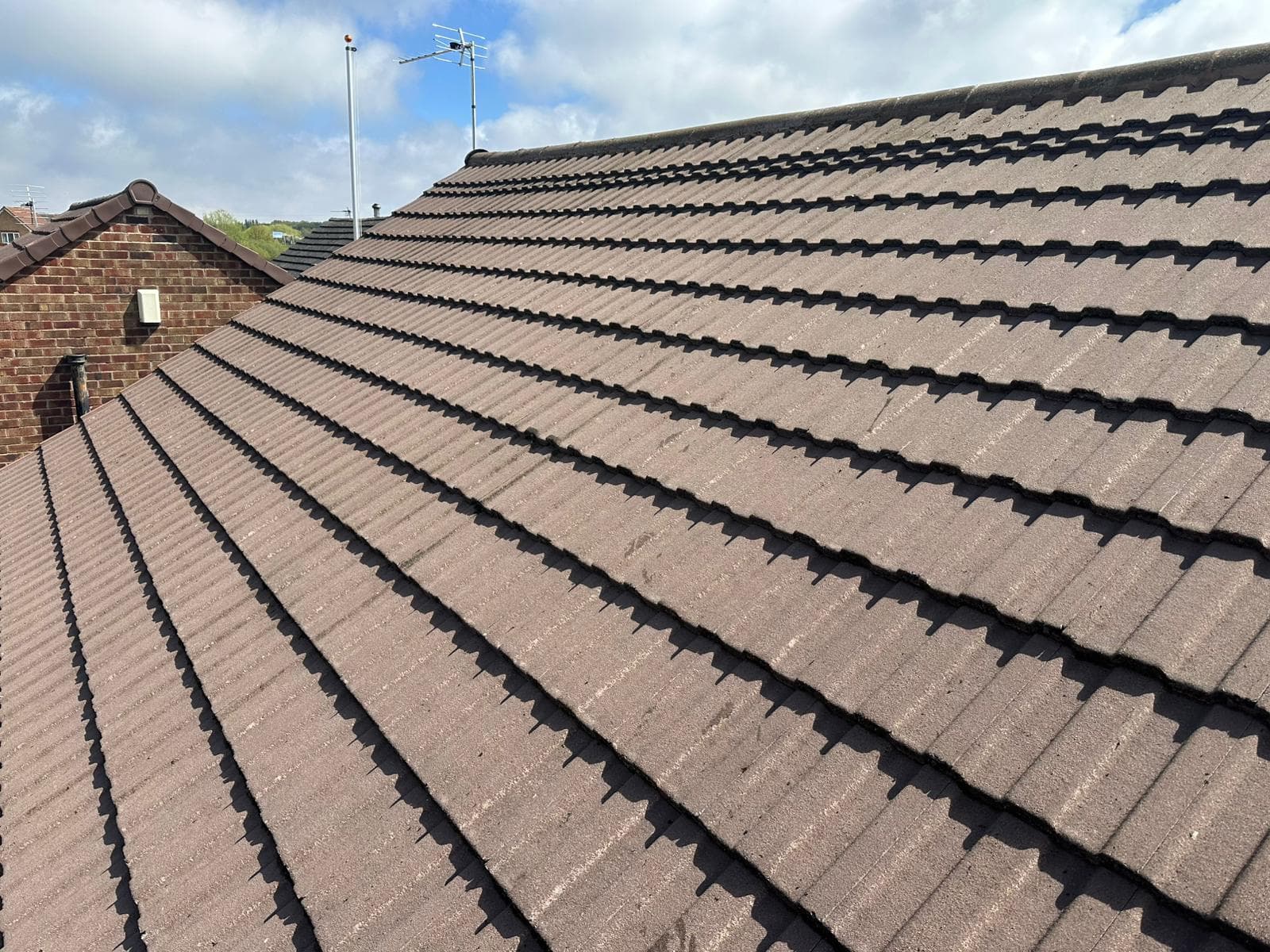
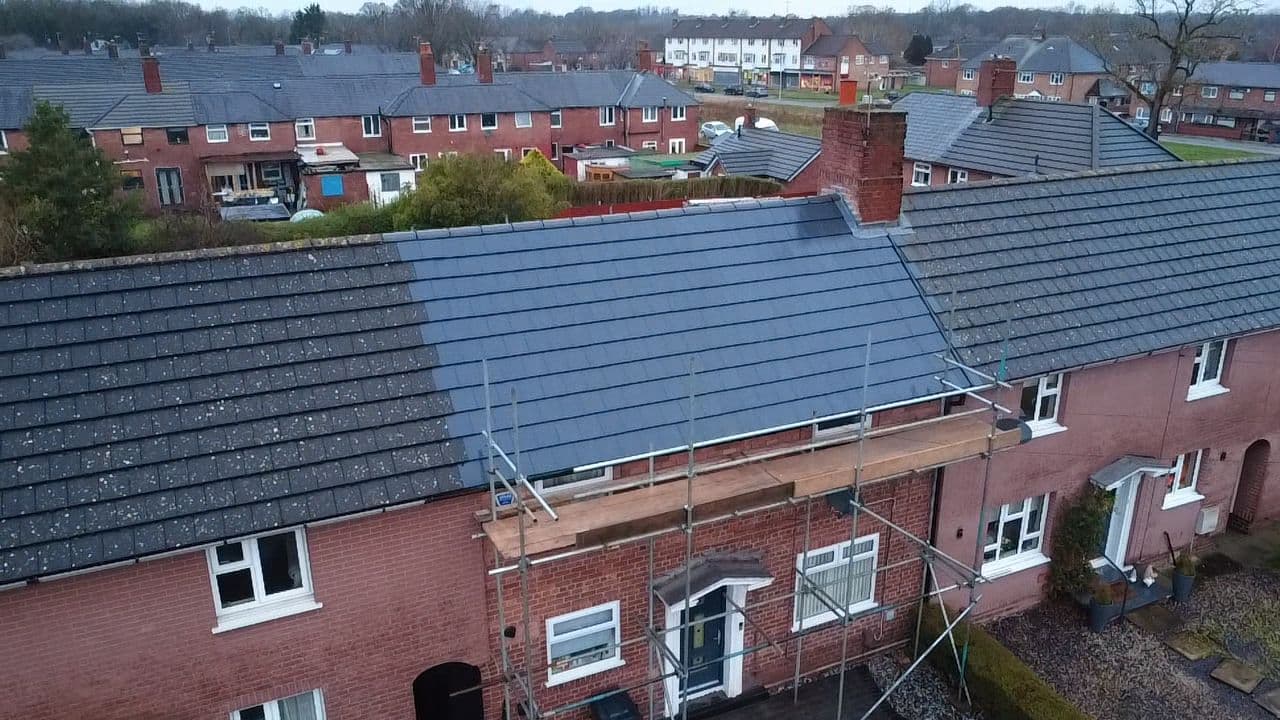
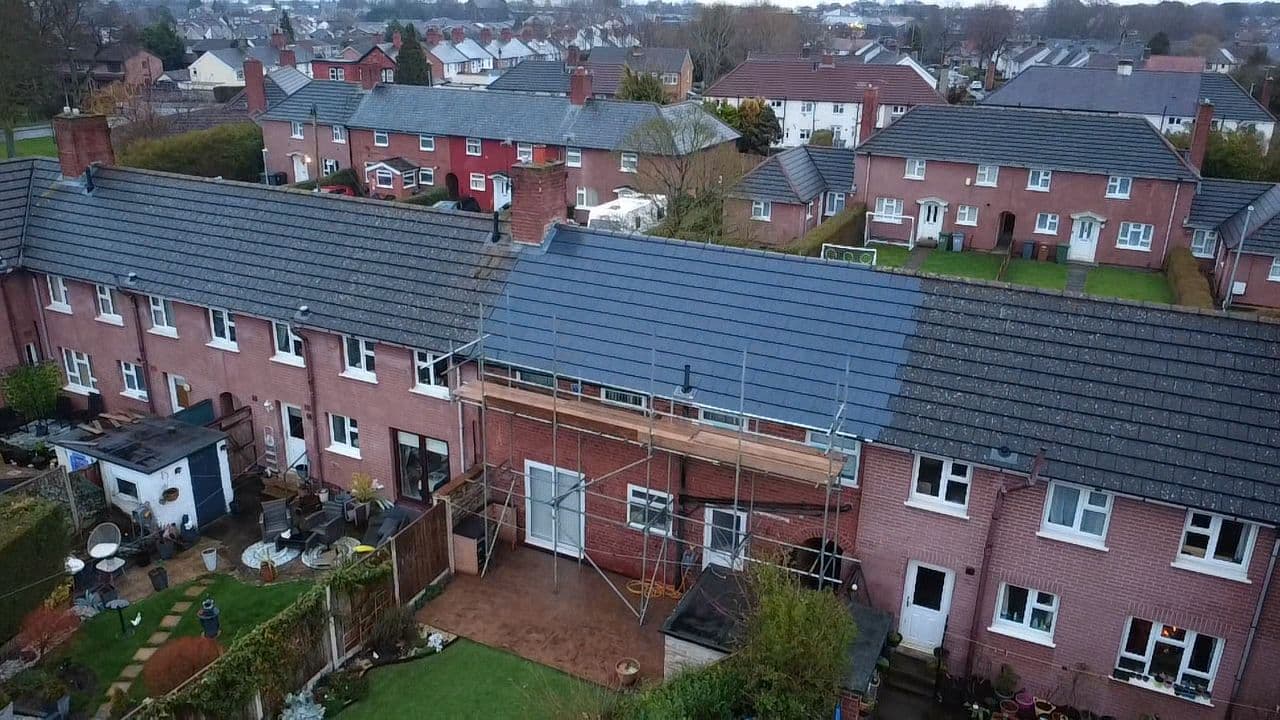
Runcorn sits at WA7 on the south bank of the Mersey, connected to Widnes by the Silver Jubilee Bridge. The town's modern identity is largely the product of the 1960s and 1970s New Town expansion, which means that the bulk of its residential stock consists of 1970s estate housing built to the low-cost specifications of that era. Halton Lea, Southgate, Castlefields and the Murdishaw estate all follow the same template: low-pitch concrete interlocking tile, single-ply felt underlay, and concrete block construction.
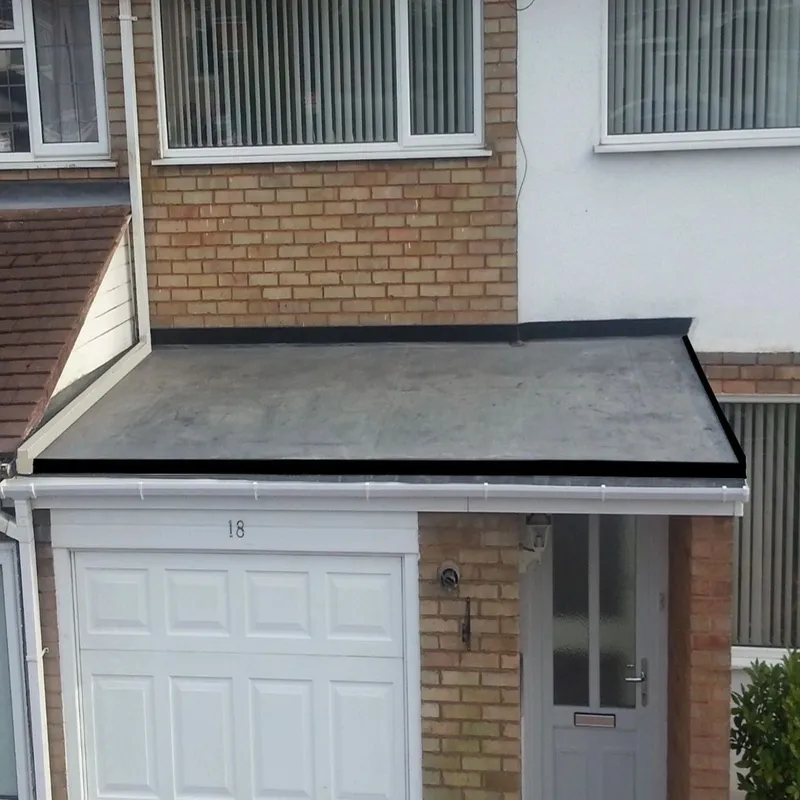
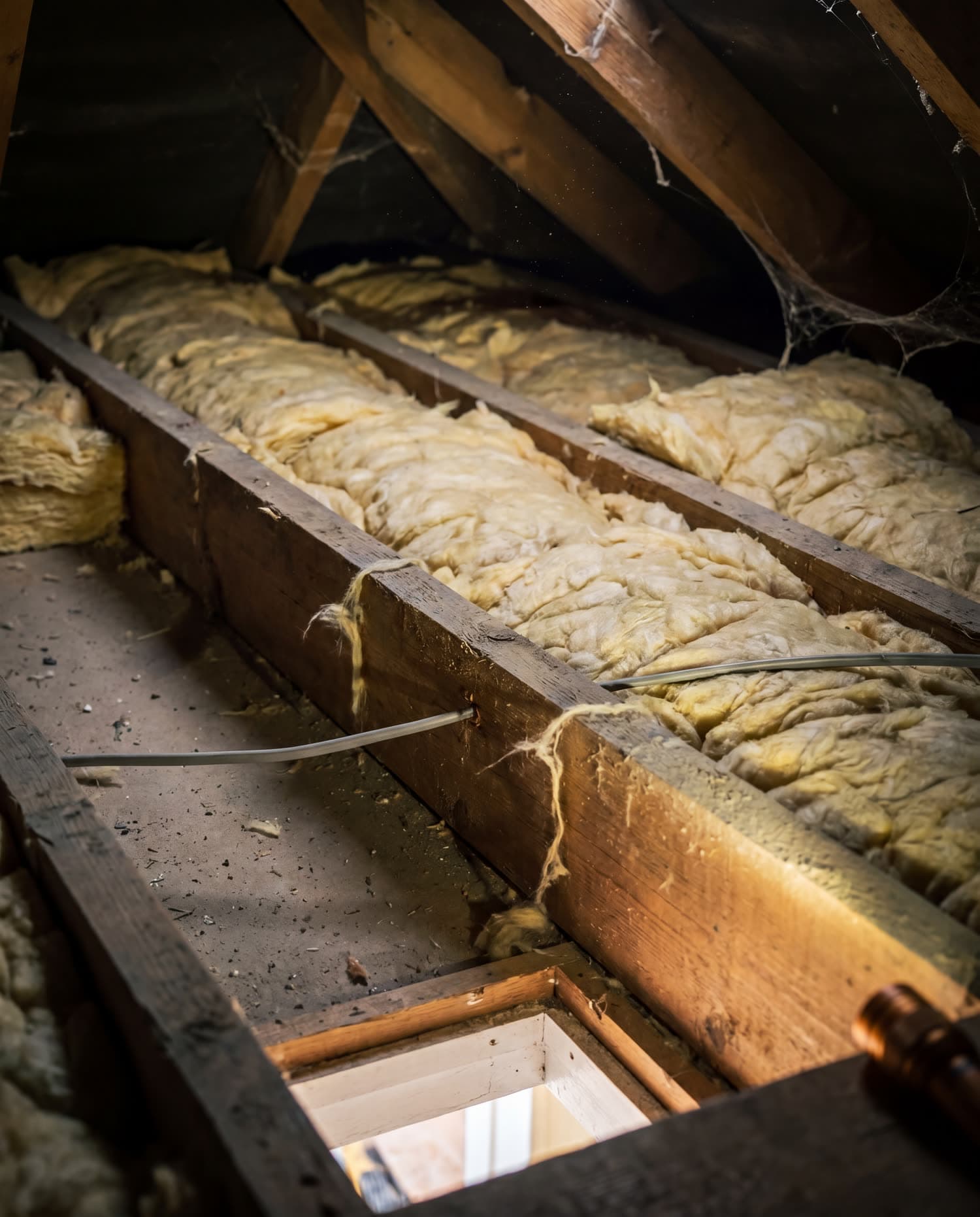
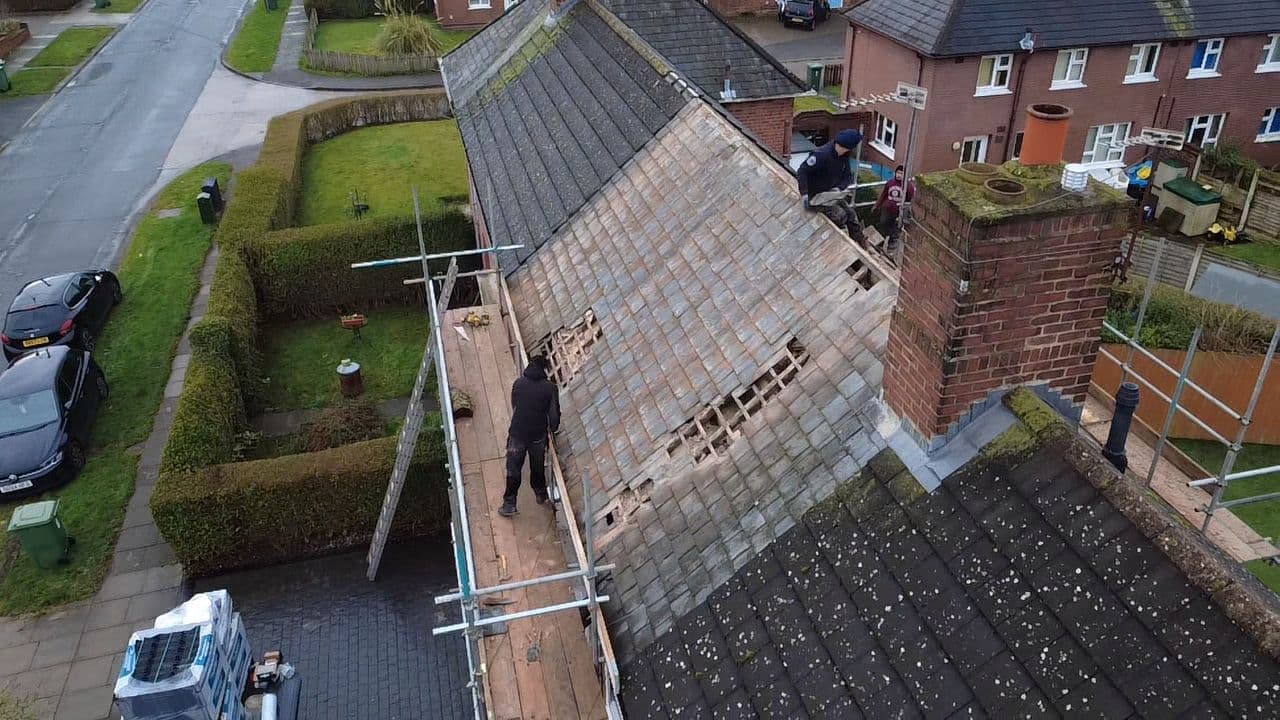
That 1970s concrete tile is now past the fifty-year mark and it is failing in a predictable way. The tiles have lost their surface coating, gone porous and started cracking at the nibs. The felt beneath has hardened and split. When we pull back a section of Runcorn estate roofing the deck condition is the key variable, because if the OSB or softwood deck boards are sound then a strip-and-recover to EPDM rubber membrane is a one-day job and significantly more economical than a full reroof. We assess the deck before quoting rather than assuming the worst.
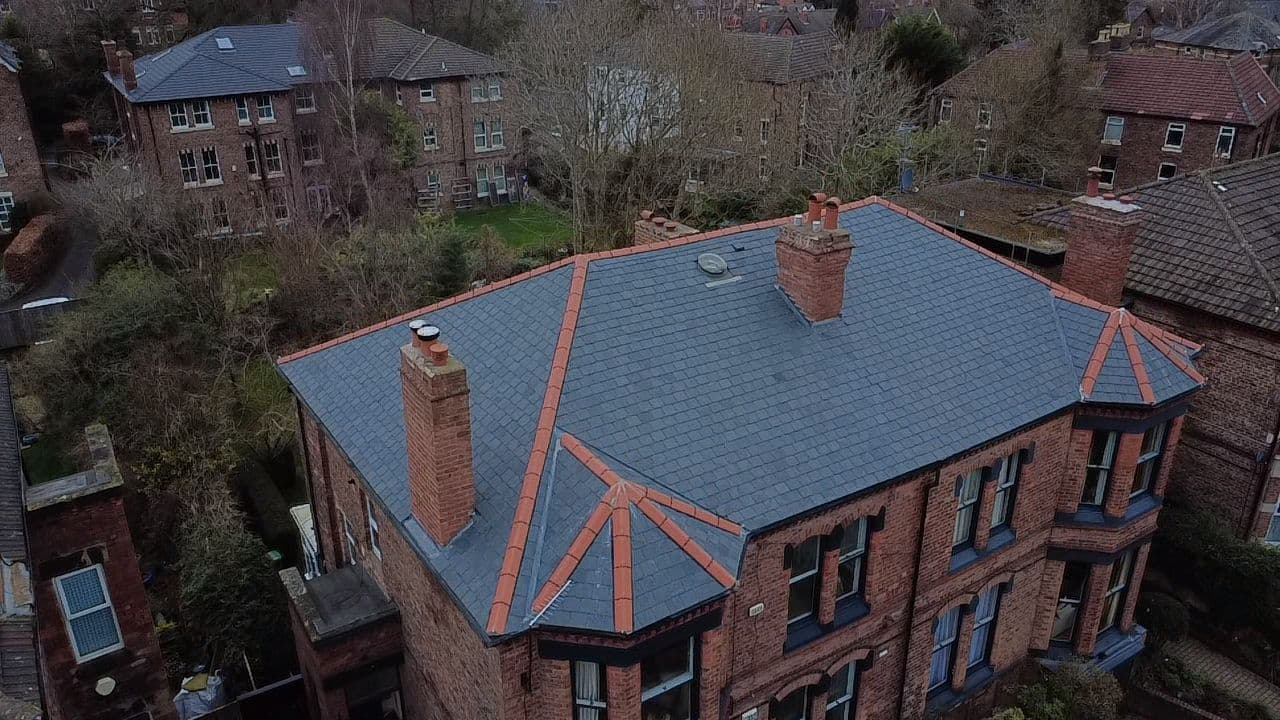
The older parts of Runcorn, around the town centre near Waterloo Road and the streets off Main Street, have more mixed Victorian and Edwardian stock with clay tile and slate, but these are a minority of the overall job pipeline.