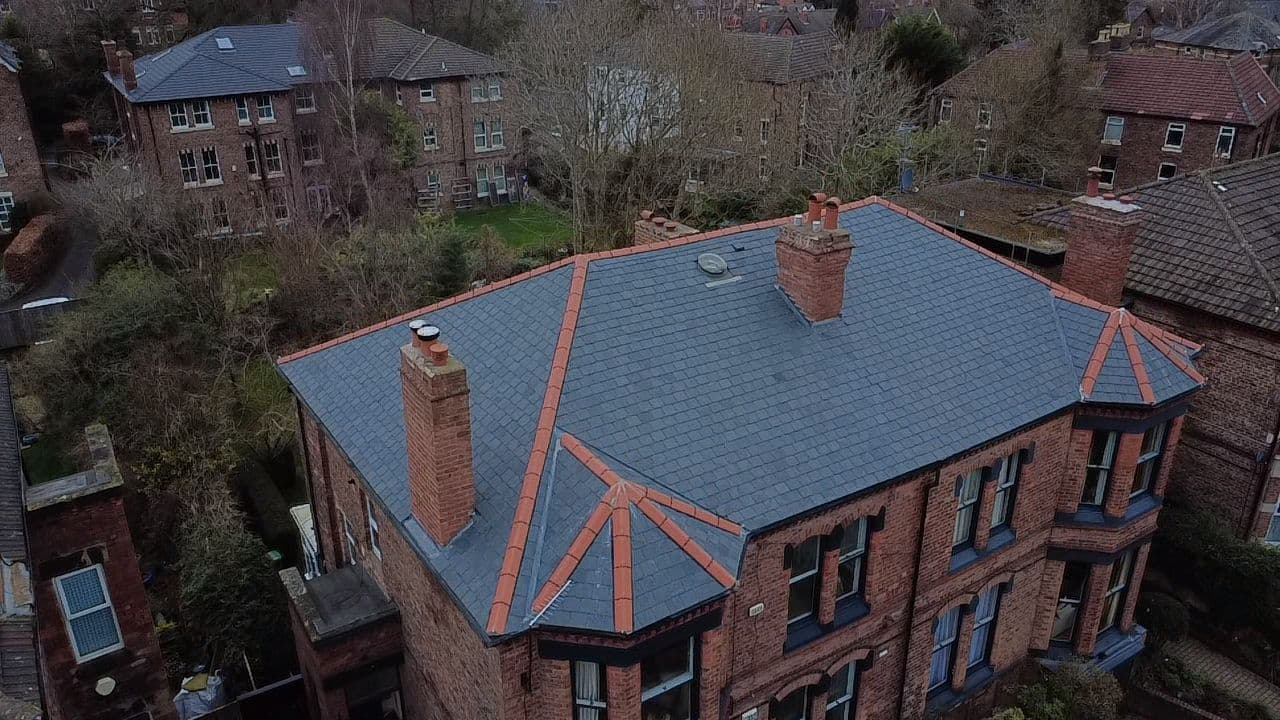
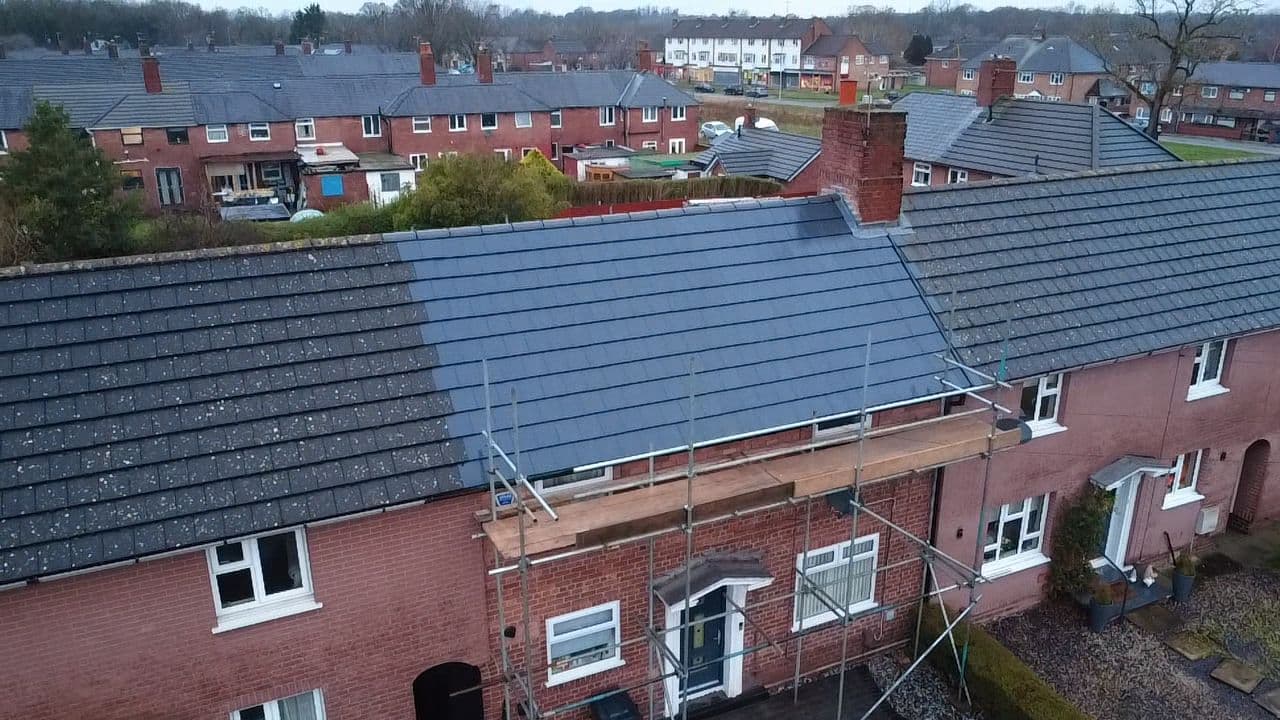
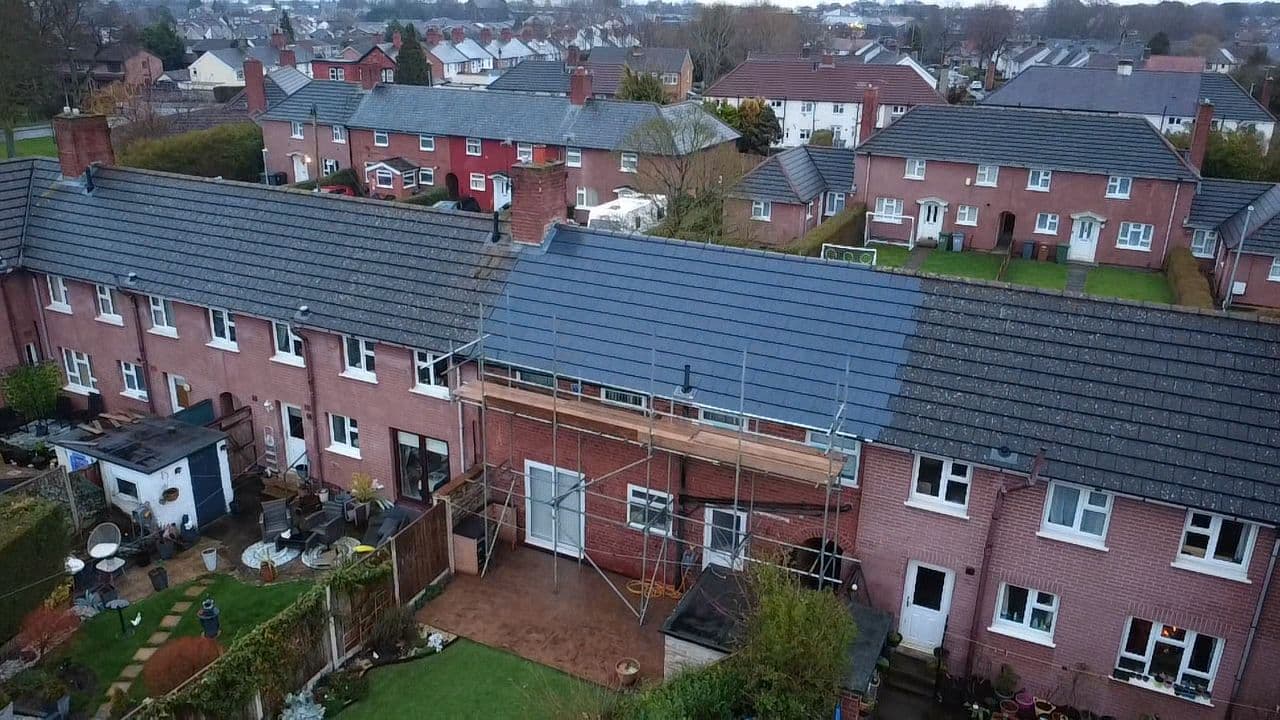
Macclesfield sits at SK10 and SK11 on the eastern edge of Cheshire, where the landscape starts to climb toward the Peak District foothills. It was a silk-mill town, and the Victorian terrace stock that grew around the mills along Jordangate, Waters Green and the inner residential streets off Park Lane reflects a working-class industrial past. The outer perimeter, toward Tytherington and the Hurdsfield estate, shifts to 1970s and 1980s detached and semi-detached, with some newer builds in the developments along Prestbury Road.
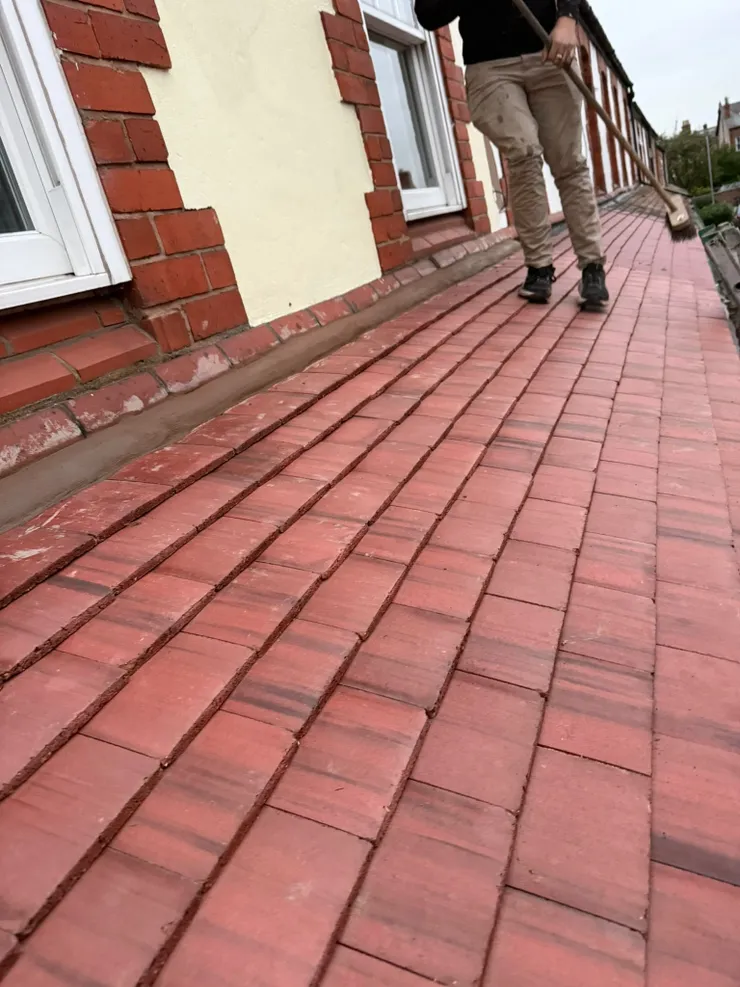
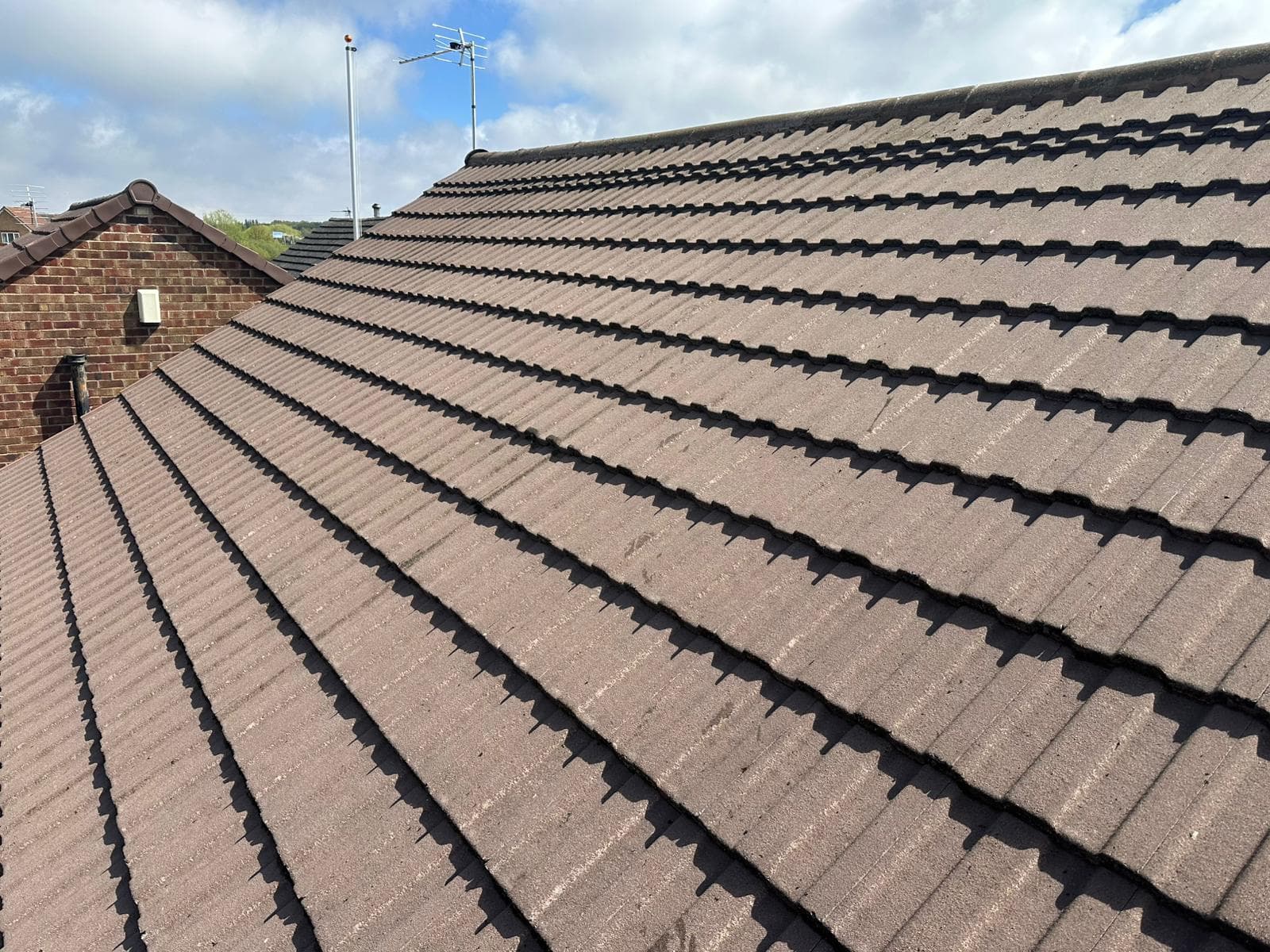
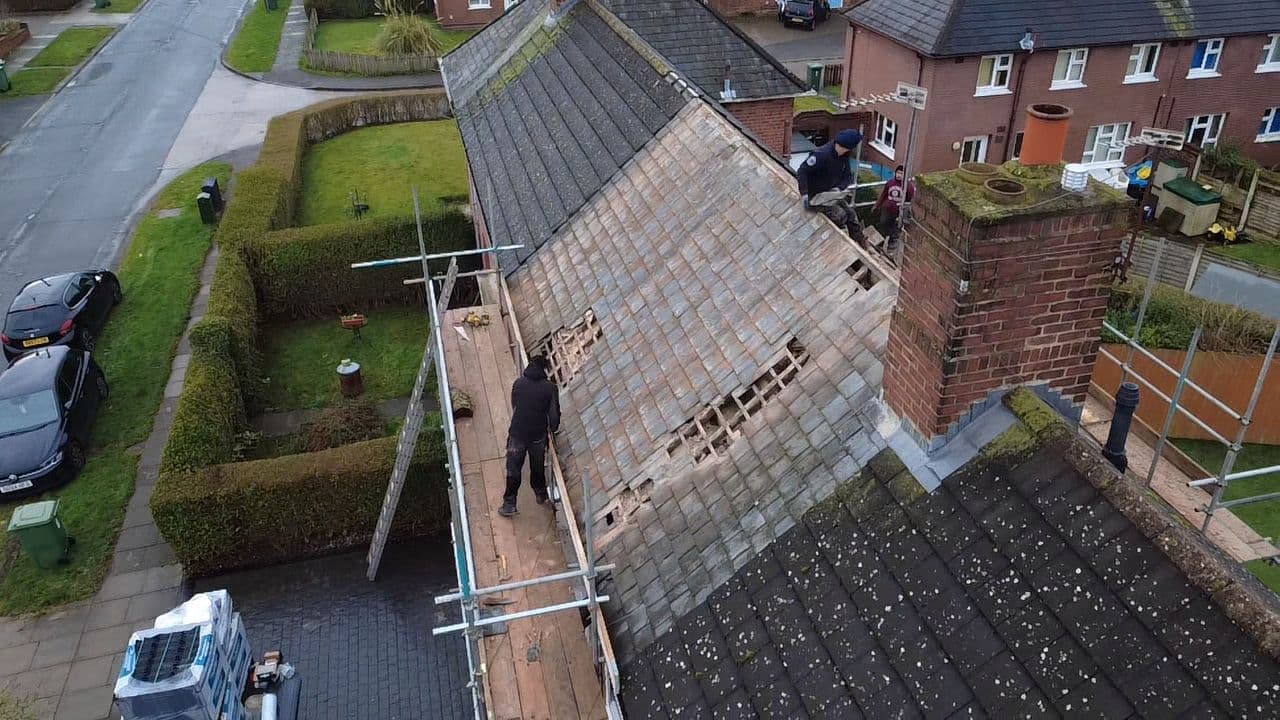
The mill-town Victorian terrace is classic Cheshire red-clay tile country. Where Liverpool and Birkenhead used Welsh slate as the default, Macclesfield's Victorian builders reached for clay plain tile from the local tileries, and a lot of it is still on those roofs. Clay plain tile has excellent longevity, but the nail fixings corrode, the tiles delaminate at the leading edge after a hundred years of freeze-thaw, and the ridge and valley mortar invariably needs attention. Sourcing matching handmade clay plain tile for repair patches is the main constraint: we use Keymer and Rosemary as our standard suppliers for Macclesfield plain-tile match work.
The higher position of the town means Macclesfield gets more frost exposure than lower Cheshire, and verge mortar failure is an earlier event here than it would be at the same property age in Northwich or Crewe.