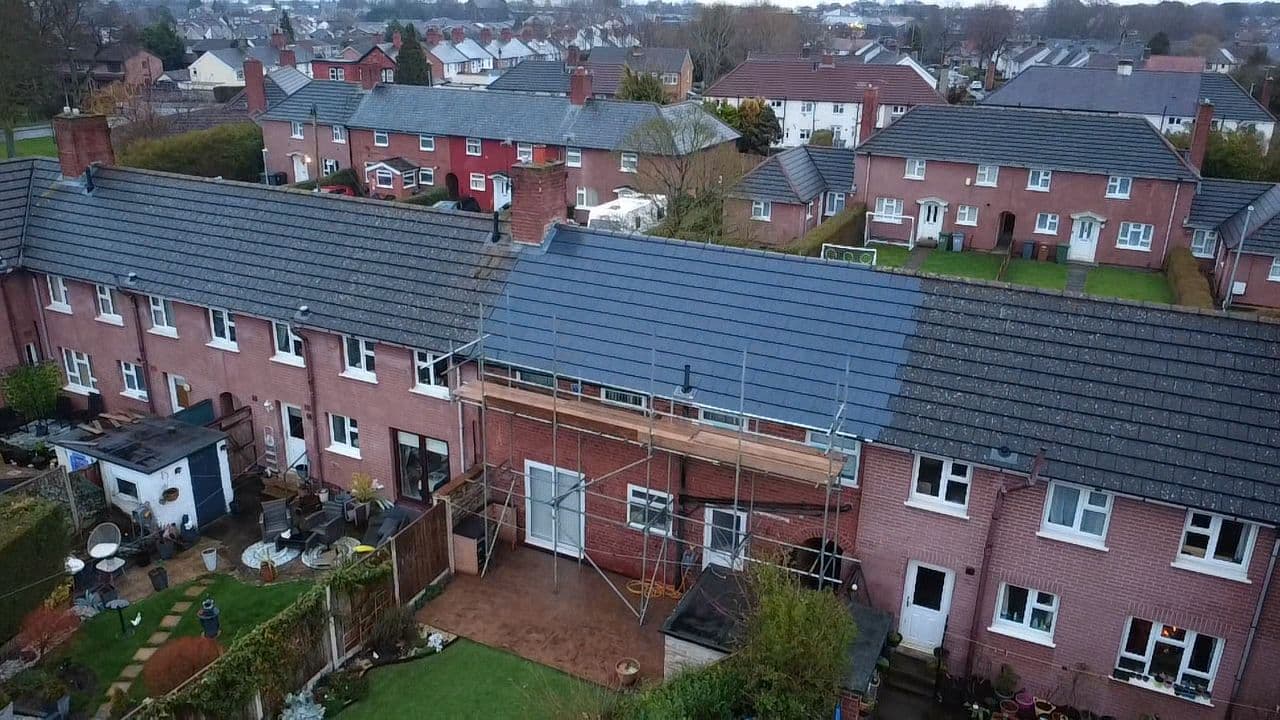
Flint covers CH6 on the North Wales coastal strip, sitting on the Dee estuary between Connah's Quay and Holywell. It is the most northerly of the Flintshire coastal towns and the most exposed to the north-westerlies that come off the estuary and the Irish Sea beyond. The town grew principally as a Victorian industrial centre around its steel and chemical works, and the residential stock closest to the waterfront reflects that: 1930s semi-detached and some Edwardian terrace on the inner streets, with post-war estate housing extending along the A548 coastal road toward Bagillt.
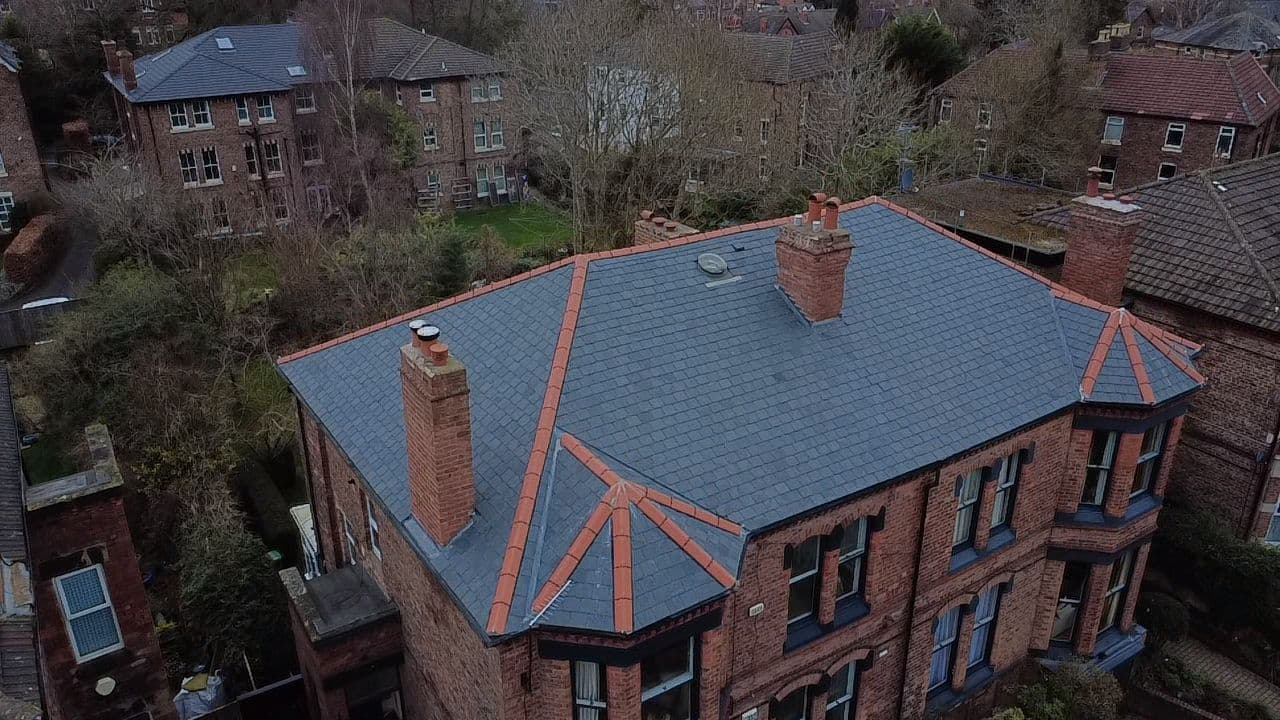
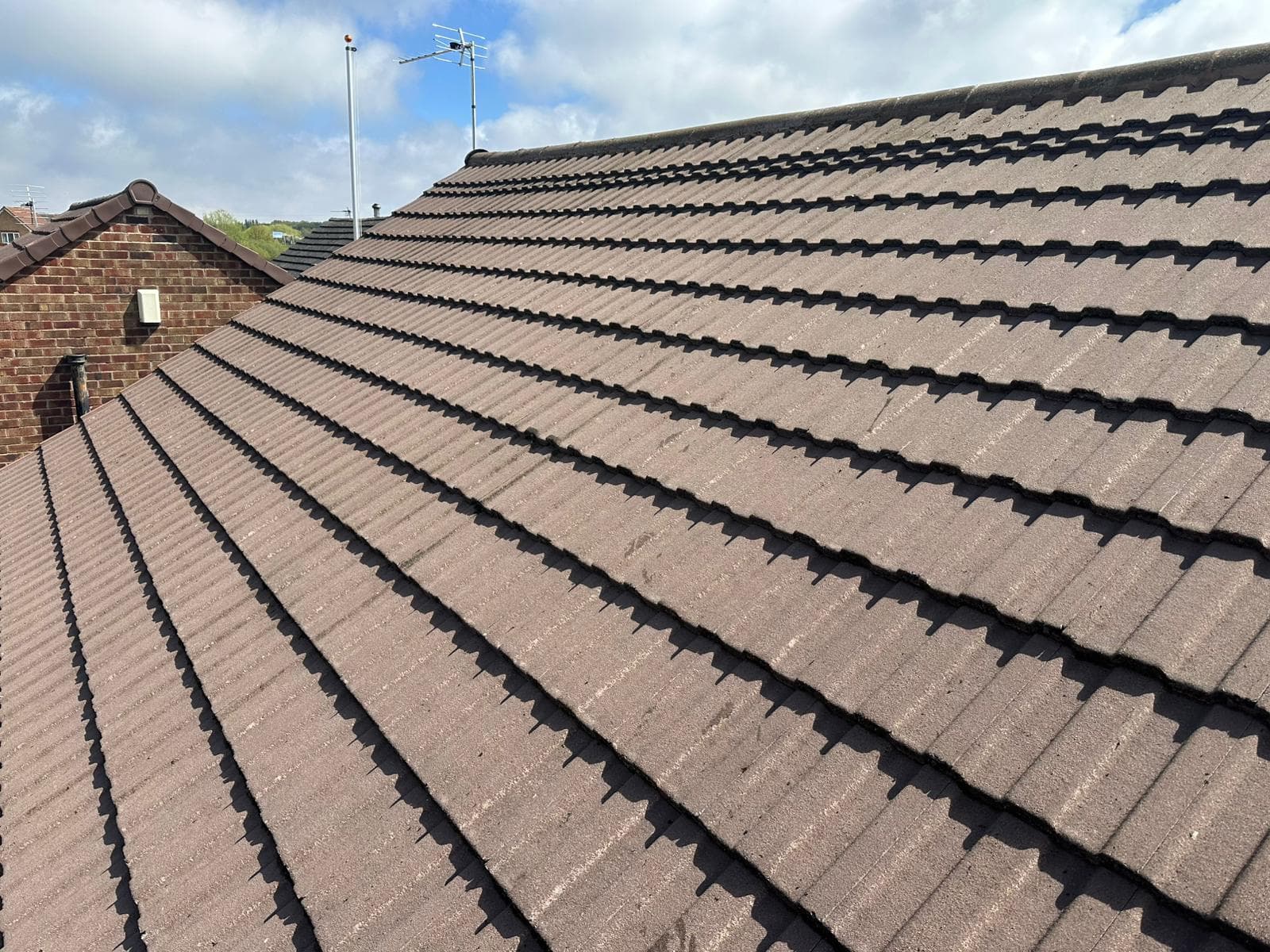
The concrete tile on Flint's 1930s semi belt is in the same condition you find across the North Wales coastal strip: weathered, porous, and with mortar that has been opened by salt and frost to the point where the ridge and verge tiles are loose. Replacement demand is high, and the specification we run most often in Flint is Marley Edgemere in slate grey, because the flat profile is closest to the worn-down surface of the original tile and blends with the surrounding streets.
Flint Castle is a recognised heritage landmark and the streets immediately around it, particularly Church Street and Castle Dyke, include some properties with listed or conservation considerations. The estuary walk along the waterfront is also a reminder of how much salt air these properties are absorbing year-round.